Last reviewed 30 May 2026
Balancing Grain Combine Harvesters: Three Critical Assemblies
Time is money: a single day of combine downtime during harvest can cost €3,450–€6,900 in losses. Pre-season balancing is not a cost — it is an investment in reliability.
Introduction: why combine balancing is critical
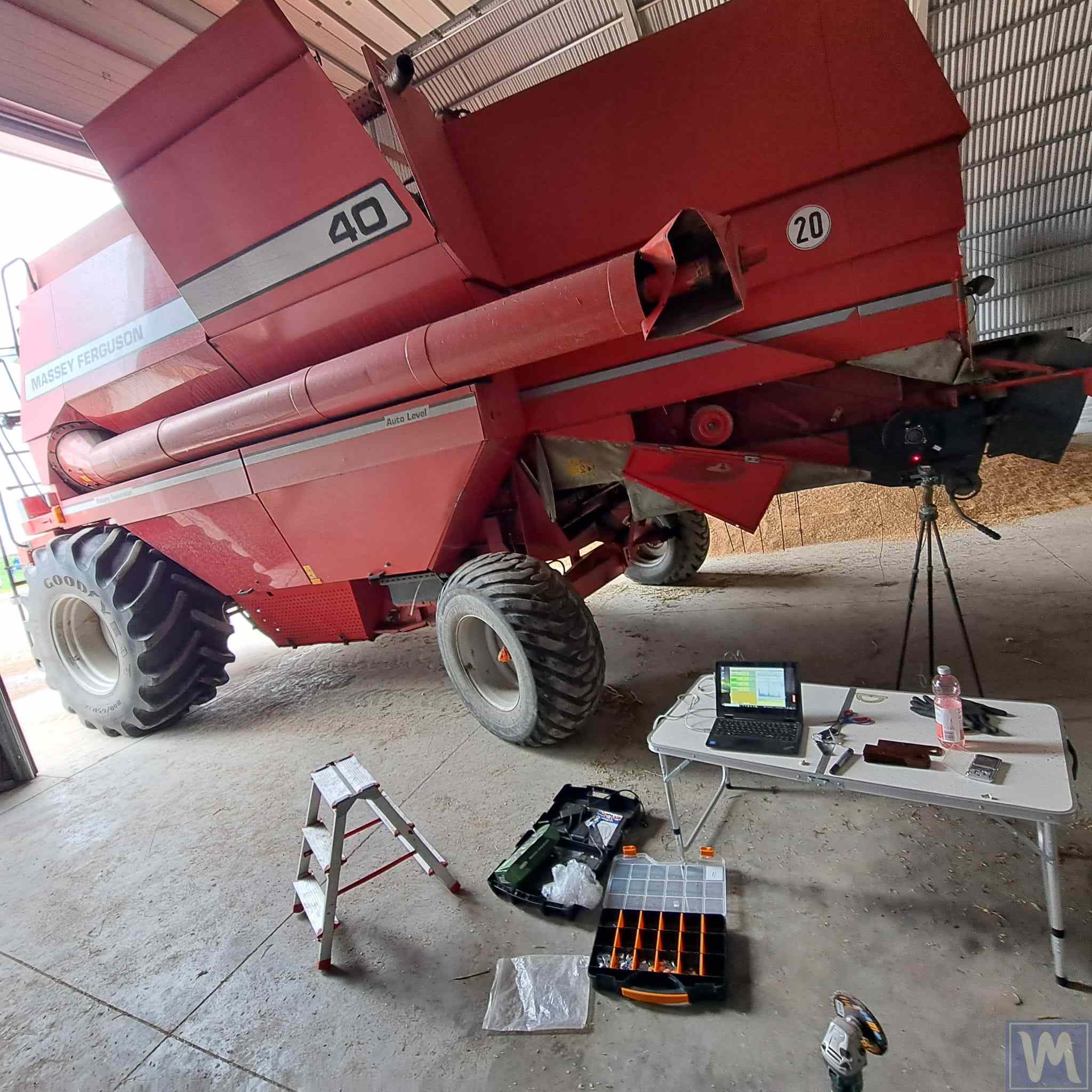
Photo. Balancing a Massey Ferguson combine: a laptop running the software, a laser tachometer on its stand, and the tools for on-site diagnostics and balancing
A grain combine harvester is a complex set of rotating assemblies. Three of them are especially critical when it comes to imbalance:
- The threshing drum — the heart of the combine, which threshes the grain
- The straw chopper — runs at extreme speeds
- The cleaning fan — separates the grain
Imbalance in any of these assemblies leads to:
- Increased vibration throughout the whole combine
- Accelerated bearing wear
- Cracks in the frame and mountings
- Reduced threshing/cleaning quality
- The risk of a breakdown at the peak of the season
1. The threshing drum
Construction and operating regime
Design: a cylinder 500–800 mm in diameter with longitudinal rasp bars or pegs.
Speed: 600–1,200 rpm (depending on the crop)
Weight: 200–500 kg
Causes of imbalance
- Uneven bar wear: the central section wears more heavily than the edges
- Bent or broken rasp bars: from striking a stone or piece of metal
- Drum distortion: from overloading or an impact
- Straw or debris build-up: in wet weather
2. The straw chopper
Construction
Design: a cylindrical shaft fitted with free-swinging knives or flails
Speed: 3,000–4,000 rpm (very high!)
Job: to shred the straw into mulch for spreading across the field
Why the chopper is a frequent source of vibration
It is the fastest-rotating assembly on the combine. At such speeds, the slightest imbalance turns into severe vibration:
- The knives blunt unevenly — one weighs 450 g, another 380 g
- Knives can break — from striking a stone or piece of metal
- The thin housing can flex, adding further vibration
Getting the combine ready for the season: a balancing checklist
Two to three weeks before harvest begins:
- Threshing drum: inspect the bars; balance if necessary
- Chopper: check the knives, replace as a matched set, balancing is MANDATORY
- Fan: clean off the dust, check the blades, balance
- All bearings: check for play, replace worn ones, fresh lubrication
- Mountings: torque up all bolts, check for cracks
The economic case
Cost of prevention (all three assemblies): €2,050–€3,000
Cost of a breakdown during the season:
- 3 days of downtime: 3 × €4,600 = €13,800
- Repairing the broken assemblies: €3,700–€6,900
- Crop losses (over-ripening): €2,300–€9,200
- TOTAL: €20,000–€30,000
Return on prevention: €20,000 / €2,550 = 7.8×
Conclusion
Balancing a combine's rotating assemblies before the season is an essential procedure that guarantees reliable operation during the most critical period of the year. Pay particular attention to the chopper (running at 3,000–4,000 rpm) and the threshing drum.
Recommended schedule:
- Annually: chopper and fan (before the season)
- Every 2–3 years: threshing drum (at major overhaul)
Combine harvester balancing
Balancing instruments and a mobile call-out service
The Balanset-1A instrument
A portable instrument for balancing the drum, chopper and fan
Buy the instrumentOn-site balancing
Balancing combines before the season, working in the off-peak window
Order the serviceQuick checklist
- Inspect threshing drum bars, balance if needed
- Check chopper knives, replace as matched set
- Clean fan blades of dust and balance
- Check all bearings for play, re-lubricate
- Torque all mounting bolts, inspect for cracks
- Prioritise the high-speed chopper and drum