Balancing a fan hung on ropes
Balancing very often "won't work" not because of the rotor and not because of the instrument, but because of how the machine is standing.
A fan simply placed on concrete behaves like a washing machine on spin cycle that was never levelled. The frame touches the floor at random points, the feet hop and knock, the machine slowly creeps. Amplitude and phase wander from run to run, the response to the trial weight is random, and the instrument honestly calculates a new answer every time. The concrete is not to blame. The problem is that the machine is just standing on it.
There are two correct options: soft, on spring vibration isolators, or rigid, anchored into a concrete base.
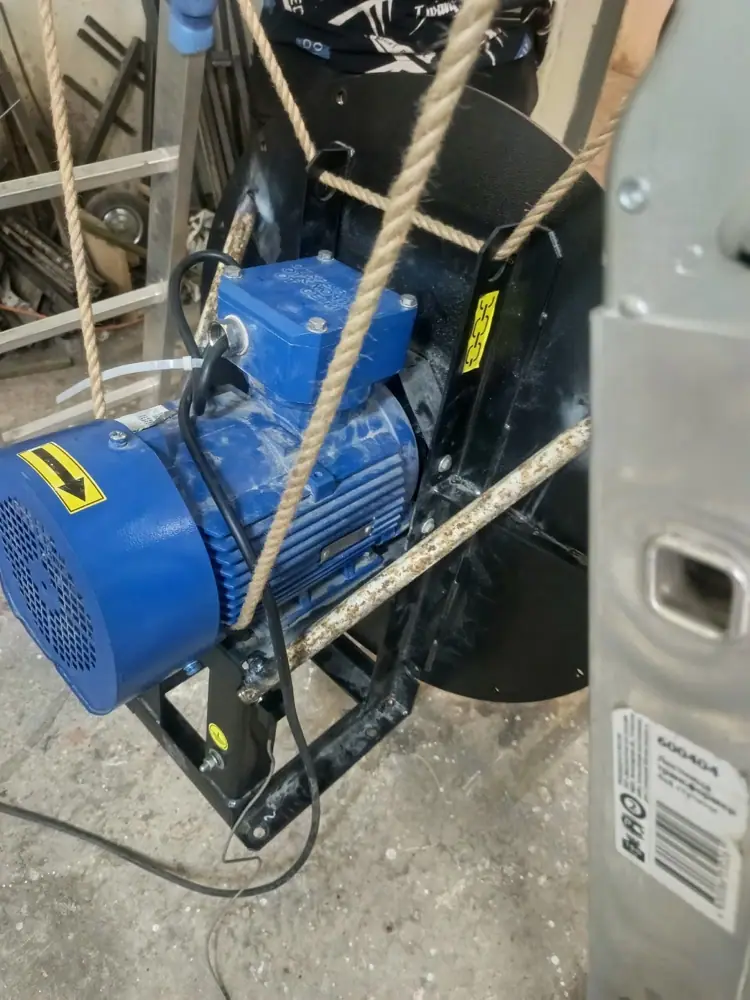
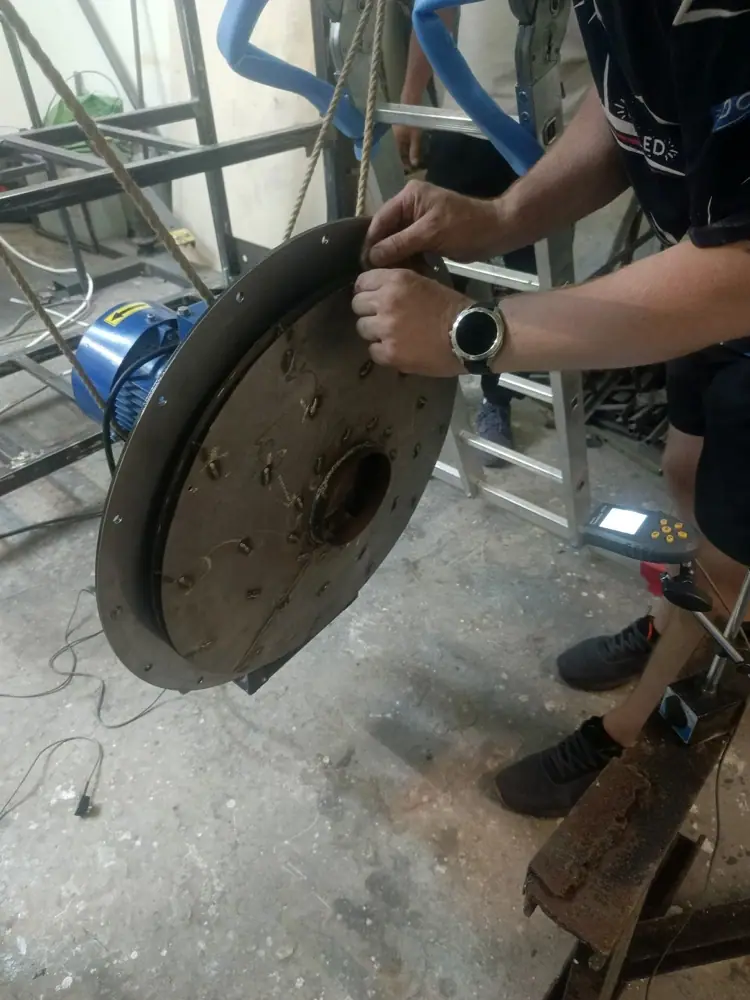
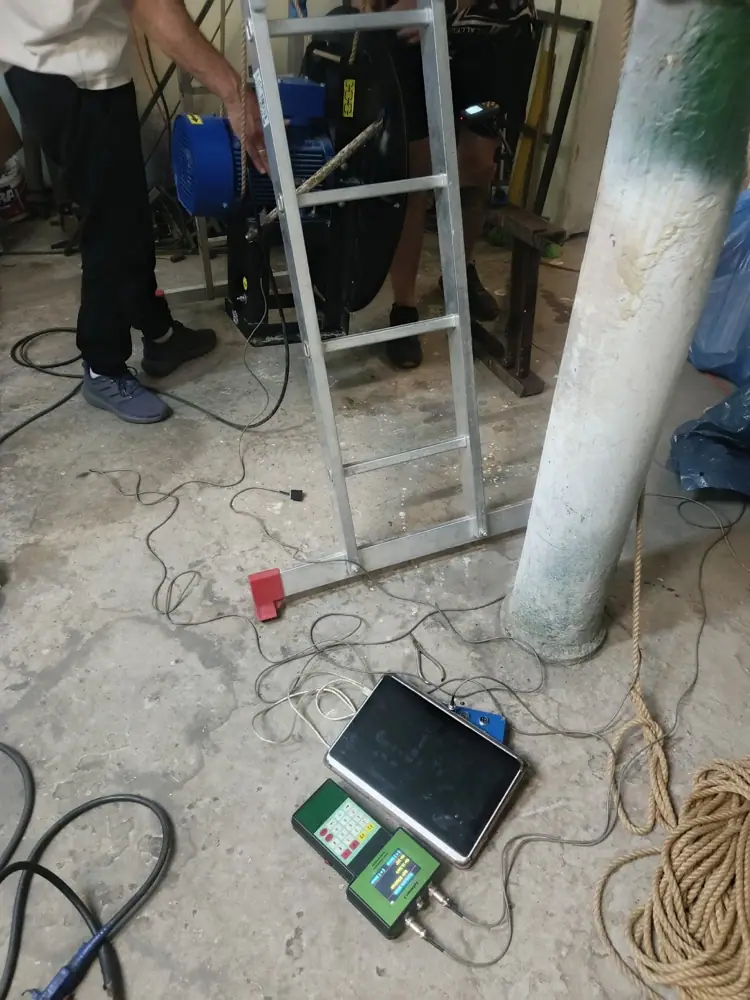
When neither is available, I do some engineering shibari: I hang the fan on ropes. A hanging machine swings slowly, from fractions of a hertz to a few hertz, while at 1500–3000 rpm the rotor turns at 25–50 Hz. At that frequency the suspension barely gets in its way, and the machine behaves as a free body: it vibrates in proportion to the unbalance, nothing knocks or slips, and the readings repeat. Soft-bearing balancing machines work the same way.
Caveats. The ropes and the support must hold the weight with margin. Tie it at several points: at start-up the motor twists the machine. Nobody stands near the impeller. Balance at working speed. After the fan is installed in its permanent place, check the vibration once more.