The Difference Between Static and Dynamic Unbalance
Static Unbalance
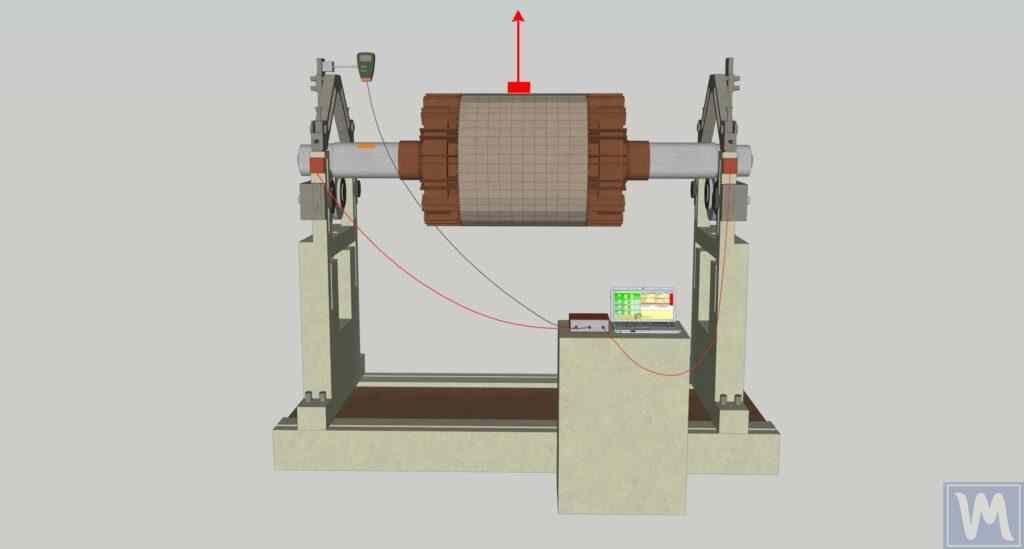
In static unbalance, the center of gravity of the rotor is offset from the axis of rotation. This creates a one-sided force that tries to rotate the rotor so that its heaviest part points downwards. If you rotate such a rotor by 90 degrees, the "heavy spot" will always move downwards.
- Occurs when the rotor is stationary.
- Used for narrow, disc-shaped rotors.
- Corrects the uneven mass distribution in one plane.
Dynamic Unbalance
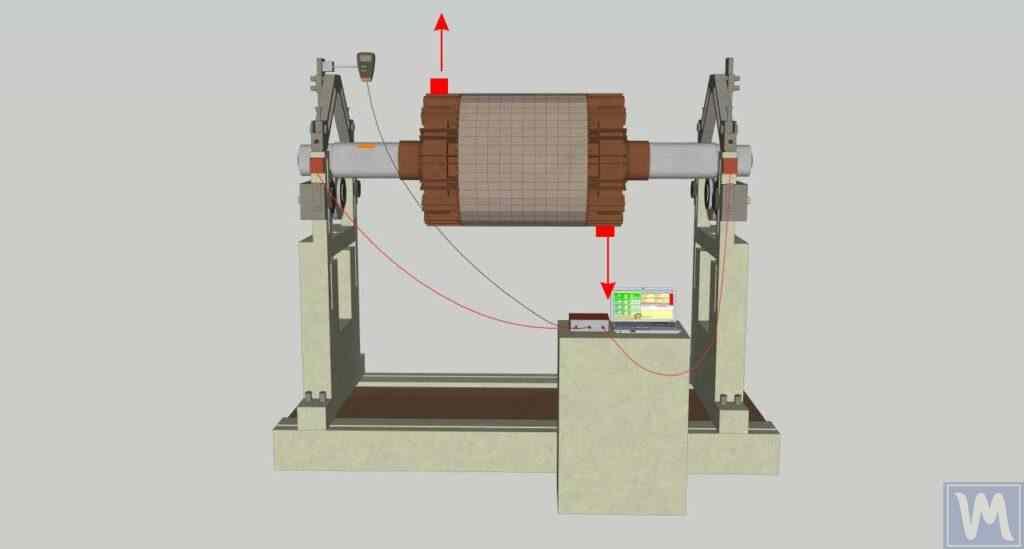
In dynamic unbalance, there are at least two different mass displacements in different planes. This causes not only a one-sided force like in static unbalance but also moments that generate additional vibrations during rotation. Such a rotor does not turn by itself when rotated 90 degrees because the forces cancel each other out. This type of unbalance can only be corrected dynamically.
- Occurs only when the rotor is spinning.
- Arises from two unbalanced masses in different planes along the rotor's length.
- Suitable for long rotors with two axes; requires correction in two planes.
For correcting dynamic unbalance, a device like the Balanset-1A with a two-plane balancing function is essential.