ISO 1940 Tolerance Calculator: A Practical Guide
The core of professional balancing is not just reducing vibrations, but also proving that the achieved quality meets industry standards. This is precisely what the Balanset-1A's integrated ISO 1940 tolerance calculator is designed for.
What is the Purpose of the Tolerance Calculator?
The calculator determines the permissible residual unbalance for a rotor based on its mass, operating speed, and the required quality grade (G-class). This allows you to objectively assess whether the result meets the requirements after correction.
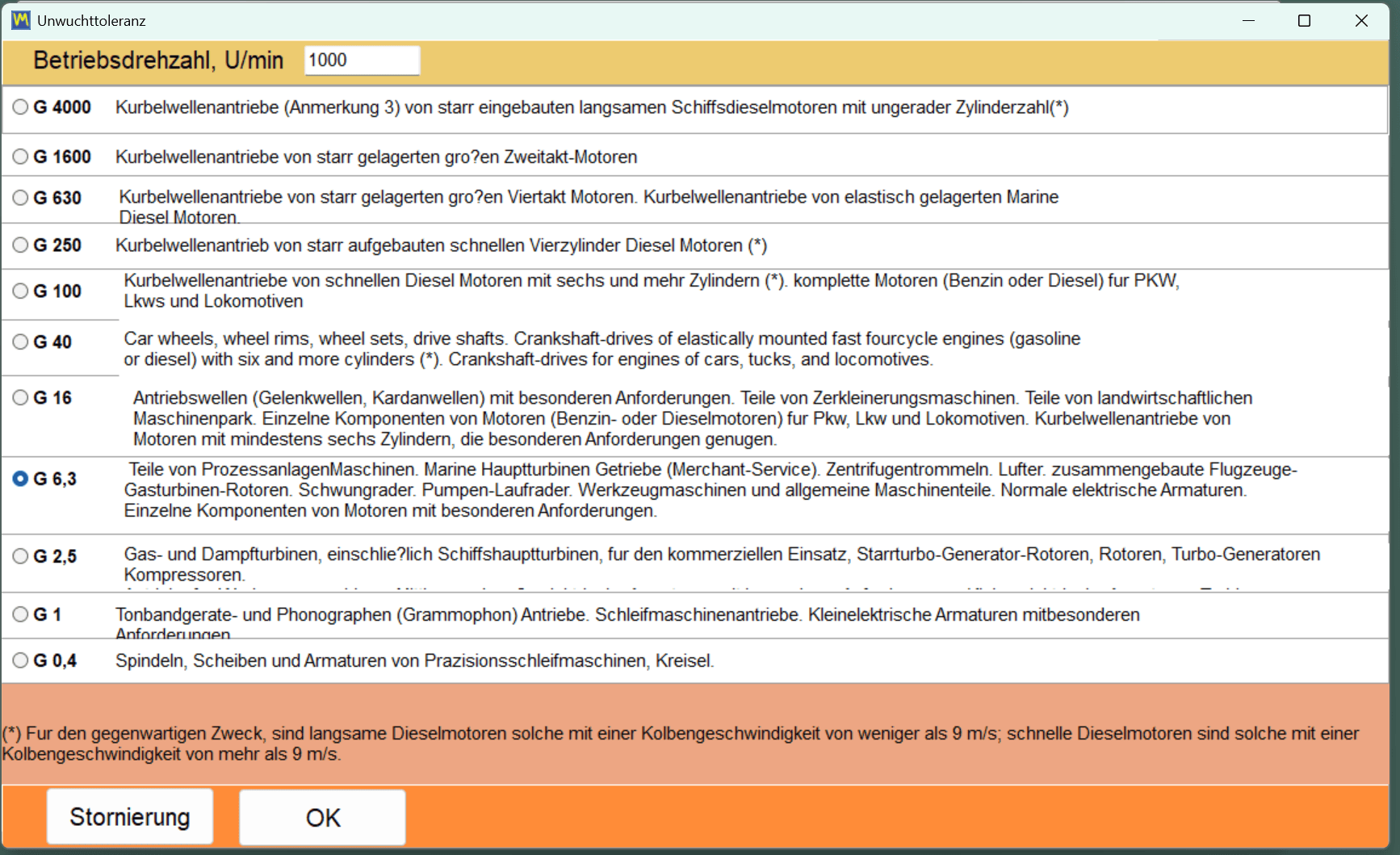
What do the G-Classes Mean? (Practical Examples)
The G-class (quality grade) according to ISO 1940 is essentially a "speed limit" for vibrations. The lower the G-number, the stricter the requirement and the smoother the rotor must run. Here are some typical examples:
| Quality Grade (G-Class) | Typical Rotors / Application Examples |
|---|---|
| G 40 | Crankshafts of large, slow-running marine diesel engines |
| G 16 | Crankshafts of high-speed 4-stroke engines, crushers, agricultural machinery (mulchers) |
| G 6.3 | Pump impellers, industrial fans, fan wheels, driveshafts, machine tool components |
| G 2.5 | Turbines (gas & steam), compressors, grinding machine spindles, high-speed electric motors |
| G 1.0 | Precision grinding spindles, gyroscopes |
Try it Yourself!
Use our free online tolerance calculator on our main website to quickly determine the required balancing quality for your specific rotor.
Use Online Calculator NowHow to Use the Calculator: Step by Step
1. Entering the Parameters
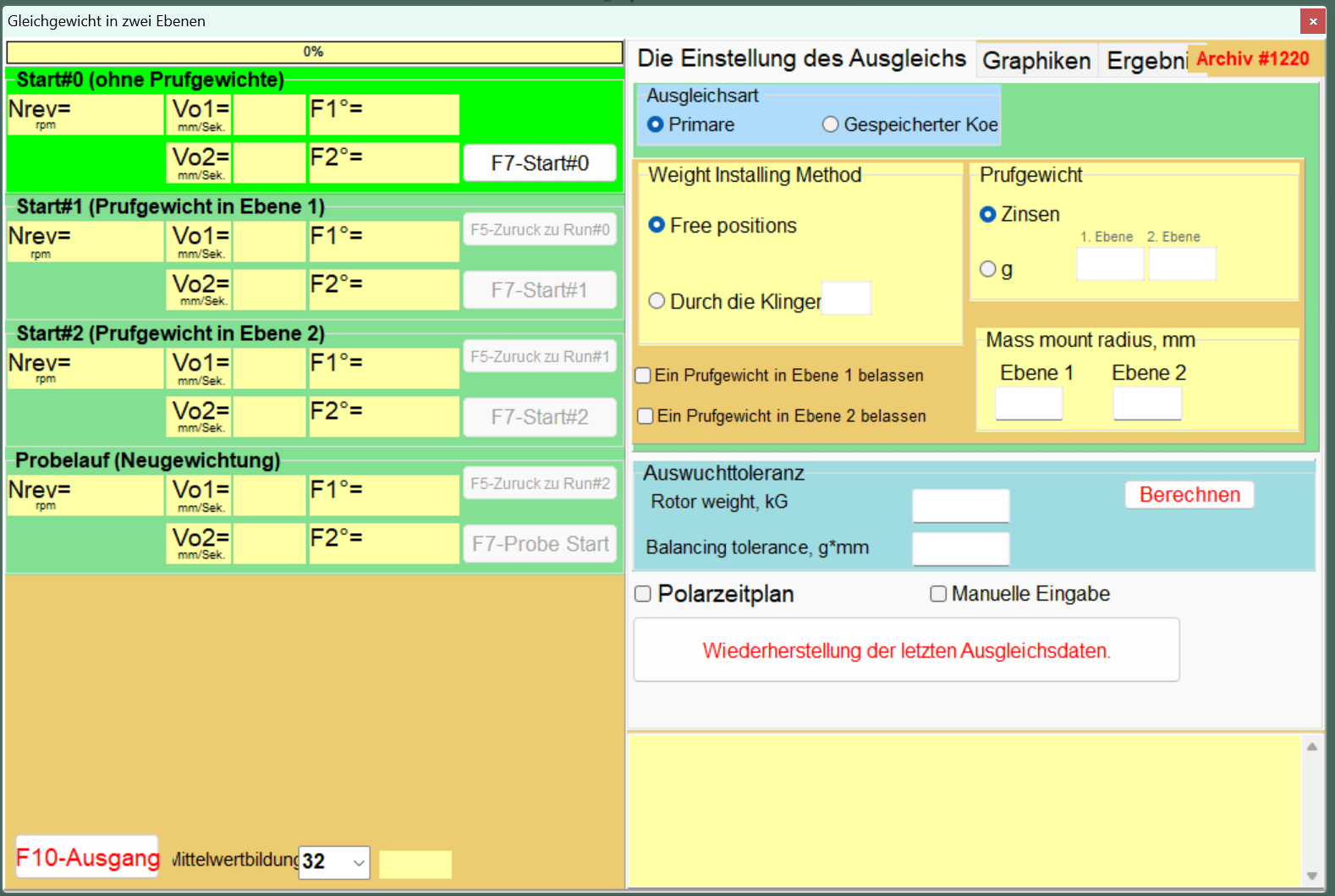
In the Balanset-1A software, open the "Balancing tolerance calculation" window. Here you need to enter the following parameters:
- Rotor mass: The weight of the rotor to be balanced.
- Rotor speed: The speed at which the machine runs in normal operation.
- Balance quality grade: Select the appropriate G-class according to ISO 1940 (e.g., G 6.3 for pumps, G 2.5 for crankshafts).
- Radius: The radius at which the correction weights will be attached.
2. Calculation and Interpretation of Results
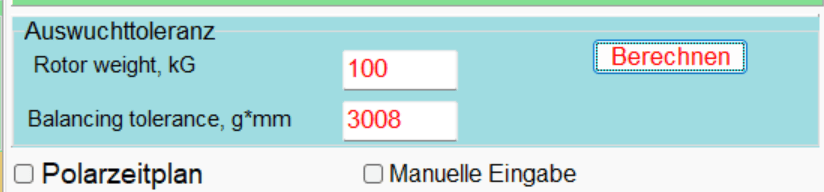
After clicking "Calculate", the software displays the results:
- Permissible residual unbalance: The maximum allowed residual unbalance value, often given in gram-millimeters (g·mm).
- Permissible eccentricity: The corresponding maximum displacement of the center of mass.
Compare this target value with the actual value displayed by the device after balancing. If your actual value is less than or equal to the target value, your work meets the industry standard.
3. Units and Options
The software offers additional flexibility. For example, you can customize the units for the calculation, which is particularly useful for documentation.
Advantages of the Integrated Calculator
- Professional Quality Control: You deliver not just a "quiet" rotor, but one that is demonstrably compliant with international standards.
- Automated Efficiency: No manual look-up in tables. All calculations are done instantly and without errors.
- Reliable Documentation: The results can be directly incorporated into your balancing reports.
The integration of the ISO 1940 tolerance calculator makes the Balanset-1A a powerful tool for anyone who values precise and standard-compliant balancing work.